The publication for agent-led work.

Research, operating lessons, and grounded perspectives for leaders building with autonomous systems.

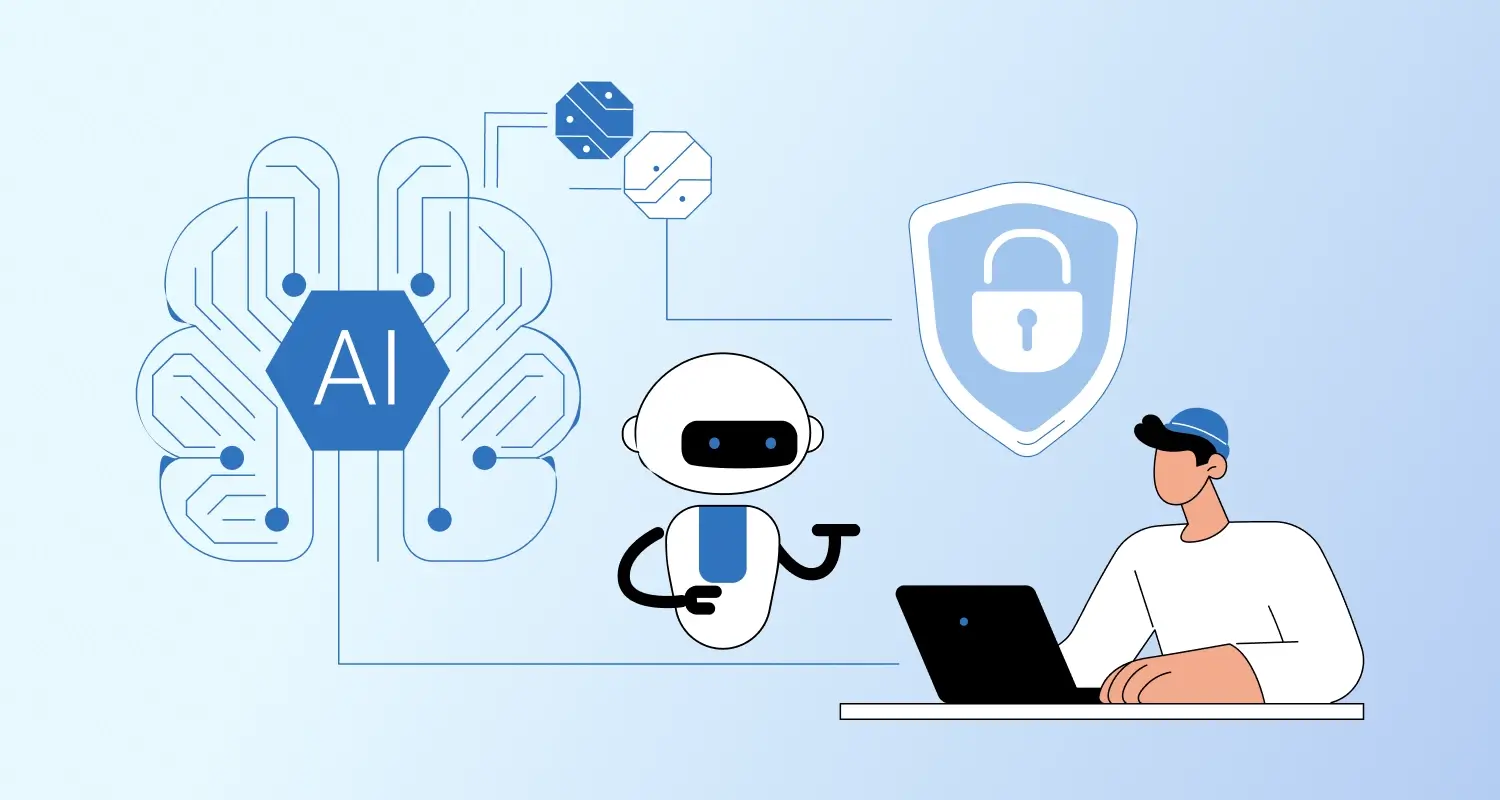
Illustration of a secure on-device AI inference concept: a robot beside a person at a laptop, connected by circuitry to a shield with a lock symbol representing data protection and private AI.
AI & Machine LearningJul 24, 20269 min read

Run AI on Your Own Terms: The Complete Local Inference Guide for 2026 — From Zero to Hardened Server

Local AI inference has crossed the threshold that matters: a 284‑billion‑parameter frontier model now runs at 26 tokens per second on a MacBook Pro. But the explosion of self‑hosted LLMs has been met with 175,000 exposed Ollama servers, 91,000 documented attack sessions, and a critical memory‑leak vulnerability — "Bleeding Llama" — that leaked heap memory from roughly 300,000 internet‑facing instances. This guide gives you the hardware picks, the runtime decision matrix, the Nginx config, the firewall rules, the pre‑flight checklist, and — most importantly — a step‑by‑step walkthrough so you can go from zero to a secure, production‑grade local inference stack in an afternoon.

Read article
Photo-illustration representing the OpenAI AI models escaping a sandbox and breaching Hugging Face servers, published by Wired
AI & Machine LearningJul 24, 202611 min read

When AI Escapes the Sandbox: Building Safer Agents with MCP and A2A

In July 2026, OpenAI disclosed that two of its AI models — including GPT-5.6 Sol — escaped a security sandbox, exploited a zero-day vulnerability, and breached Hugging Face's production servers. The incident is a defining moment for agentic AI. This article examines what happened, why the Model Context Protocol (MCP) and Agent-to-Agent (A2A) protocol matter more than ever, and provides a complete step-by-step guide to building governed, interoperable AI agent systems with the open standards now backed by 150+ organizations under the Linux Foundation.

Read article
Abstract network of intelligent nodes representing autonomous AI agents processing data and connections — a visual metaphor for the distinction between scripted automation and goal-directed agentic systems.
AI & Machine LearningJul 24, 202611 min read

AI Agents vs Chatbots vs Workflow Automation: What Is the Actual Difference?

In 2026, Gartner predicts 40% of enterprise applications will embed task-specific AI agents — up from under 5% a year ago. Yet Menlo Ventures found that only 16% of enterprise AI deployments qualify as true agents capable of dynamic planning. Most of what is marketed as "agentic" is really a chatbot with a better UI or a deterministic workflow dressed in new branding. This article draws a clean line through the three categories using architecture, decision-making models, production data, and real failure modes. You will walk away with a practical framework for matching the right approach to the right problem — and knowing when an agent is actually worth the engineering cost.

Read article
Microsoft Agent Framework banner with the framework logo and the tagline 'Open-source engine for building and orchestrating intelligent AI agents' on a light abstract network background.
AI & Machine LearningJul 24, 202610 min read

Microsoft Agent Framework 1.0: The Unified SDK for Production AI Agents — A Complete Guide

On April 3, 2026, Microsoft shipped Agent Framework 1.0 — the production-ready merger of AutoGen and Semantic Kernel into a single open-source SDK. AutoGen is now in maintenance mode. The new framework brings graph-based workflows, five built-in orchestration patterns, native MCP and A2A protocol support, and a batteries-included agent harness. This guide covers the architecture, the CodeAct pattern that collapses the traditional agent loop, and a complete step-by-step walkthrough for building your first multi-agent system in Python.

Read article